
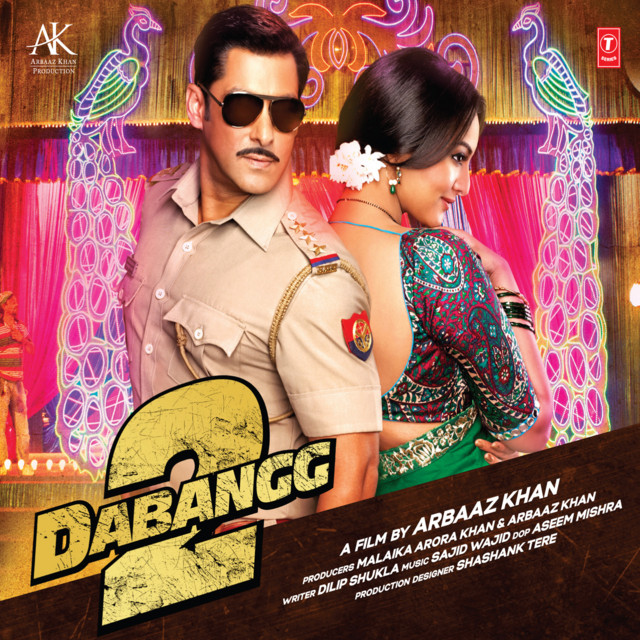
Dagabaaz Re opens with a word that means traitor and then spends the entire song being charmed by the very person it accuses. That contradiction is the song's heartbeat. Here is what dagabaaz means, why the accusation turns into devotion, and what makes this Dabangg 2 track so impossible to forget.
What Does "Dagabaaz" Mean?
Dagabaaz (दगाबाज़) comes from dagabaazi (दगाबाज़ी) — treachery, deceit, betrayal. A dagabaaz is someone who plays false: who makes a promise without intending to keep it, who lures you in and leaves you stranded, who appears to be one thing while being another. In everyday Hindi and Urdu, the word carries genuine weight. Calling someone a dagabaaz in a serious context is a real accusation.
But language does not exist apart from context, and Dagabaaz Re does something clever with the word: it uses it as a form of address — and that shift alone softens the charge into something playful. The beloved is called a dagabaaz not because they are a villain, but because they have stolen the singer's heart. That theft, the song implies, was the best thing that ever happened.
What "Re" Adds
The Re (रे) at the end is a vocative particle — the way you call out to someone directly, with feeling. In English it is closest to "O!" or "hey you!" but warmer and more musical. In folk, classical, and devotional songs across India, re appears constantly as a way of addressing someone in the moment — a beloved, a friend, or even a god. It transforms the word before it from a label into a call.
Together, Dagabaaz Re means: "Oh you deceiver!" — said the way you say it when the deception was falling in love with you. The word is reclaimed the instant it is spoken. The accusation is the compliment.
The Playfulness of the Song
What sets Dagabaaz Re apart from more earnest love songs is its tone. The song is built on folk-inflected North Indian music with a Rajasthani texture — sung by Rahat Fateh Ali Khan and Shreya Ghoshal for the 2012 film Dabangg 2 — and the lyrics match that mood entirely. The beloved's "treachery" is not abandonment in any serious sense. Their crime is enchantment: they walked past, or smiled, or simply existed in the singer's field of vision, and the singer has not recovered since.
The accusation and the devotion coexist without irony because this is how certain kinds of love actually work. You mock the person for what they have done to you, and the mockery is love. The complaining voice is the adoring voice. There is no gap between them.
This playful register also connects to a long tradition in Indian folk and film music where the beloved is gently teased — accused of witchcraft or deception — as a way of expressing attraction that would feel too exposed if stated plainly. The singer of Bewafa mourns; the singer of Dagabaaz Re grins. Both are in love, just in different keys.
Rahat Fateh Ali Khan and Shreya Ghoshal
The song's two voices do complementary work. Rahat Fateh Ali Khan brings a Qawwali-inflected richness — his voice is vast and warm, and when he calls out the title, it carries both the playfulness and a genuine depth of feeling underneath it. There is real affection in the accusation, and his voice communicates that even to listeners who do not understand a word.
Shreya Ghoshal's lines are more agile and bright, fitting the folk texture of the track. Her voice does not echo his — it responds to him, the way the beloved might answer the accusation with a laugh. Together they give the song a call-and-response quality: two people trading exaggerated complaints, which is another way of saying they are trading declarations.
The Dabangg 2 Context
Dabangg 2 (2012) is a high-energy action sequel set in the world of Chulbul Pandey, a swaggering and irreverent police officer. Its songs lean into North Indian folk sounds, Rajasthani colour, and a mood of celebration that does not take itself too seriously. Dagabaaz Re fits this world exactly: it is a love song for people who would rather tease than confess, who express devotion through banter rather than earnest declaration.
The song's energy — cheerful, rhythmically alive, with that folk percussion backbone — means it works both as a love song for the film's characters and as a completely standalone celebration. You do not need to have seen Dabangg 2 to feel the song's warmth. The word dagabaaz and the particle re together do all the context-building the song needs.
Key Words Worth Knowing
- Dagabaaz — deceiver, betrayer; someone who commits dagabaazi (treachery)
- Dagabaazi — the act of betrayal or deception; used in serious contexts, but in the song repurposed as playful accusation
- Re — vocative particle; used to address someone directly; adds warmth and immediacy
- Nakhre — airs, affectations, playful demands; often appears in the same register as dagabaaz when someone is teasing a beloved
Read the Full Lyrics & Translation
For the complete song — original Hindi lyrics, full English translation, and the meaning behind each section — read our Dagabaaz Re lyrics and meaning page. Following the lyrics alongside the audio reveals how quickly the "accusation" becomes a declaration, and how the song's tone shifts that word's entire meaning.
Why It Stays Catchy
Dagabaaz Re stays because the feeling is universal and the word is perfectly chosen. Almost everyone has experienced this: being so thoroughly enchanted by someone that you want to call them a betrayer — with a smile. One word does all of that emotional work. The complaint and the devotion are the same sentence. For more Hindi words from film songs explained, see our glossary of Hindi-Urdu words in Bollywood songs, and browse more songs on our full lyrics library.