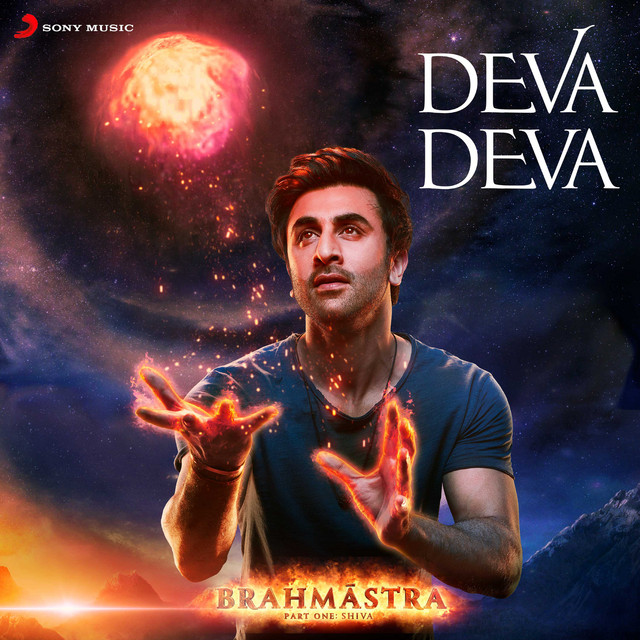
Deva Deva is a devotional invocation to Lord Shiva, set to a cinematic rock-classical arrangement, and every word in it is a building block of Hindu spiritual vocabulary. Here is what Deva Deva means and what makes it one of the most sonically ambitious devotional tracks in recent Bollywood.
What Does "Deva Deva" Mean?
Deva comes from the Sanskrit root div — meaning to shine, to illuminate. A deva is a divine being, a god, one who radiates light. Repeating it — Deva Deva — is not redundancy but intensification, the way a prayer gathers force through repetition. It is an address, a calling-out to the divine, in the same tradition as Shiva Shiva or Hari Hari in bhakti chanting.
In the song, the phrase functions as an invocation: you are summoning the divine presence before anything else is said. The repetition itself is the prayer.
The Sanskrit and Hindi Vocabulary
The song is dense with theological language worth unpacking:
Shambho — one of Shiva's names, from Sanskrit shambhu, meaning "one who brings happiness." It is a name of gentle auspiciousness, contrasting with Shiva's fiercer aspects as destroyer.
Shankara — another Shiva epithet, "one who brings peace," from sham (peace) + kara (maker). Together with Shambho, it frames Shiva not as a terrifying force but as the source of ultimate relief.
Brahma Vishnu Maheshwara — the Hindu trinity in full: Brahma the creator, Vishnu the preserver, and Maheshwara (the great lord) as another name for Shiva the regenerator. The song invokes all three in a single breath, positioning Shiva as the thread that connects the entire divine order.
Brahmastra — the film of the same name takes its title from the brahmāstra, a divine superweapon from Hindu mythology, a weapon imbued with the creative power of Brahma, capable of consuming the universe. In the film's mythology, it is the most powerful of the astras (celestial weapons). The song prepares you for a world where these ancient forces are real and active.
Jwala means flame or blaze; agni roop means "form of fire." Opening with Shiva as fire references his cosmic manifestation as the Agni Linga, the pillar of fire without beginning or end — one of the foundational images in Shaiva theology.
The Film and the Devotional Crossover
Deva Deva was composed by Pritam and sung by Arijit Singh with Jonita Gandhi, with lyrics by Amitabh Bhattacharya, for the 2022 film Brahmastra: Part One – Shiva directed by Ayan Mukerji. The film is a mythological superhero story in which the protagonist Shiva discovers that he carries a rare connection to an ancient world of divine weapons.
The song is not background scoring — it is a full bhakti invocation that functions inside the film as both prayer and character statement. It invokes Shiva not as a distant deity but as the source of the protagonist's fire-power, making devotion and identity the same thing.
Arijit Singh's performance moves between the formal gravity of a classical stuti (hymn of praise) and the emotional openness of modern Bollywood singing. There are moments where the voice sounds like one person in an empty temple and moments where it sounds like a stadium full of believers. Jonita Gandhi's counterpoint adds a second voice that feels less like a duet and more like a congregation — the sense that calling on the divine is something you do together.
Why It Sounds Different From a Standard Bhajan
Most Bollywood devotional songs choose between two modes: traditional classical (slow, ornate, temple-like) or upbeat folk-pop. Deva Deva does neither. Pritam's arrangement layers electric guitar against orchestral strings, builds to stadium-scale crescendos, and still anchors everything in the Om Namah Shivaya chant that millions of Indians have known since childhood.
This is devotional music for people who grew up both visiting temples and listening to rock. The song asks you to hold both experiences at once, which turns out to be less of a stretch than it sounds — because reverence has always found its home in the loudest, most overwhelming music a culture can make.
Read the Full Lyrics and Translation
For the complete song — every Sanskrit and Hindi line, with an English translation and phrase-by-phrase breakdown — visit the Deva Deva lyrics and meaning page. The translation makes the theological depth of the song immediately accessible even without any Sanskrit background.
Explore More Hindi Song Meanings
For other powerful devotional and spiritual words in Hindi music — deva, shakti, atma, brahman, astra — see our guide to Hindi and Urdu words in Bollywood songs. And for more song meanings across the catalog, browse the lyrics library.