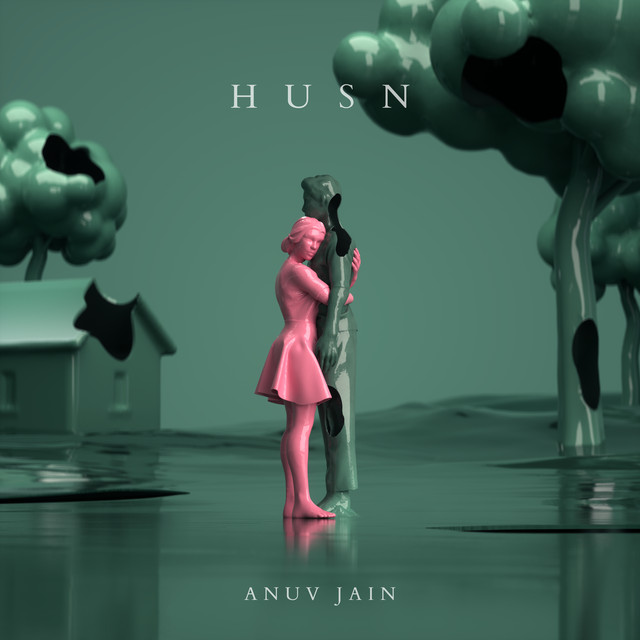
Husn by Anuv Jain is one of the defining indie Hindi love songs of the 2020s — minimalist, unhurried, and somehow more effective at conveying the feeling of beauty than most big-budget Bollywood productions. The title word means beauty in Urdu and Arabic, but in the context of the song, and in the tradition of Urdu poetry that shaped its lyrical choices, it means considerably more. Here is a complete explanation of what Husn means and why the words matter.
What Does "Husn" Mean?
Husn (حُسن) is an Urdu word borrowed directly from the Arabic husn, which comes from the root h-s-n — a root associated with goodness, grace, and excellence. In Urdu, husn specifically means beauty or loveliness, but across centuries of Persian and Urdu poetry, the word has been used to describe something far beyond physical appearance.
When a classical poet wrote of husn, they meant the quality in a beloved that draws you toward them without your consent — something that combines visible grace with an inner light, a presence so affecting that it becomes almost impossible to look away. Husn is beauty that the heart recognises before the eyes can name it. It is aesthetic, yes, but it is also spiritual and moral: a person of husn radiates something that the viewer feels as much as sees.
Anuv Jain uses the word as both the song's title and its subject. The song does not describe specific features or gestures; it describes the state of being affected by someone's husn — the way beauty operates on you when you are close to it.
Key Urdu Words in the Song
Husn is built from images and vocabulary that belong to the ghazal tradition — the classical form of Urdu love poetry — but delivered in a contemporary acoustic form:
- Bepanah (बेपनाह) — be- is the Urdu/Persian prefix meaning "without," and panah means shelter, boundary, or limit. So bepanah means without limits, boundless, immeasurable — a standard intensifier in love poetry for feelings that overflow any container. Bepanah husn is beauty beyond measure.
- Lamha (लम्हा) — a moment, from the Arabic. Love in this song is counted in moments rather than declarations, which is part of what gives it a quiet, accumulative effect.
- Chandni (चाँदनी) — moonlight. One of the oldest symbols in Urdu romantic poetry: pale, silver, diffuse, and associated with longing. Moonlight illuminates without warming, which makes it the perfect light for beautiful things that are not quite reachable.
- Ehsaas (एहसास) — feeling, inner sense, perception. The song is interested in how beauty registers inside the person watching: not the description of husn but the ehsaas — the felt sense — of being in its presence.
- Aankhon (आँखों) — eyes, in the oblique plural. The eyes are the gateway through which husn first arrives, which is why the song keeps returning to them.
What Jain does well is hold these words lightly. He is not performing erudition; he is using the vocabulary of Urdu poetry the way a Hindi speaker who has grown up around old film music might naturally reach for these words when trying to say something too large for ordinary language.
Husn in the Context of Urdu Poetry
Understanding husn fully means understanding the tradition it belongs to. In the classical Urdu ghazal, love always has an element of the unattainable. The beloved is often described as distant, indifferent, or ideal — something to be gazed at rather than possessed. Husn in that tradition is not just the beloved's beauty; it is the quality that makes the beloved fundamentally beyond reach, the very thing that makes love so relentless.
Jain does not write in the formal ghazal structure, but the emotional DNA is there: the beloved's beauty is experienced as something that arrives from outside, that changes the one who encounters it, and that cannot be approached directly. You can only describe what it does to you.
Context: Anuv Jain and the Hindi Indie Wave
Anuv Jain is one of the central voices of the Hindi independent music movement — artists who built followings through streaming and social media rather than Bollywood film placements. Husn was released in December 2023 and grew into a genuine streaming breakout, reaching listeners who had not previously engaged with Hindi indie music.
The song's success is partly about its production — spare acoustic guitar, restrained arrangement, nothing competing with the voice — and partly about its emotional honesty. Husn does not try to be grand. It tries to be true. And because it is trying to describe something as ineffable as beauty, its restraint is exactly right: you do not shout about husn; you speak quietly so the listener can feel it.
The album Husn is a single-song release, which is itself a statement. Jain presents the song as complete in itself — not part of a set of tracks but a contained world.
Read the Full Lyrics & Translation
For the complete lyrics and their English translation, visit the Husn lyrics and translation page. The full text shows how Jain layers image on image — each verse adding another facet to the same steady feeling without ever exhausting it.
More Urdu Words and Song Meanings
Husn belongs to a long chain of Urdu words that songwriters return to because nothing else quite replaces them. For a deeper guide to the vocabulary of Hindi and Urdu music — zaalim, saiyaara, bewafa, ishq, and more — read the guide to common Hindi and Urdu words in Bollywood songs, and browse more lyrics with translations in the lyrics library.