Diwali 2026 falls on Sunday 8 November, and the festival runs five days, from Dhanteras on Friday 6 November to Bhai Dooj on Tuesday 10 November. If you are building a Diwali songs playlist for 2026, that is the first thing to get right: it is not one night. It is five different occasions in a row, and they want five different kinds of music.
Most Diwali playlists are a single block of upbeat Bollywood dance numbers with one aarti stapled to the front. Play that on Dhanteras morning while the house is being scrubbed and it is fine. Play it on Diwali night, fifteen minutes after the lamp has been circled, and it lands wrong. This is a guide to matching the music to the day.
The five days, and what each one sounds like
The calendar below is the common North Indian and Maharashtrian sequence. Regional calendars shift by a day in places, and Lakshmi puja timing depends on the local amavasya muhurat, so check a panchang for your city.
- Friday 6 Nov — Dhanteras. Cleaning, shopping, the first diyas. Daytime energy.
- Saturday 7 Nov — Naraka Chaturdashi, Chhoti Diwali. The early oil bath, then an evening with friends. The loudest night of the five.
- Sunday 8 Nov — Diwali, Lakshmi puja. Aarti after dusk, then family, then the street.
- Monday 9 Nov — Govardhan puja, Annakut. Krishna's day. Devotional, food-centred.
- Tuesday 10 Nov — Bhai Dooj. Brothers and sisters. Small, warm, domestic.
Dhanteras: the cleaning soundtrack
Dhanteras is the only day of the five that is mostly work. The house gets emptied, wiped and rearranged, and the music's job is to keep everyone moving without demanding attention.
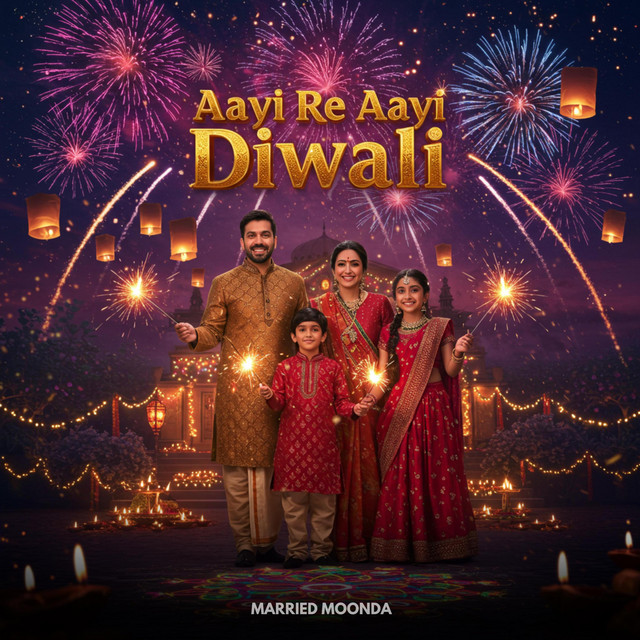
I wrote Aayi re aayi Diwali for exactly this. It is a family-preparation song: a mother telling everyone to clean, every corner of the house wanting to shine, nobody allowed to sit quietly. It is deliberately simple and repetitive because that is what a cleaning song needs to be.
The other Dhanteras theme is money, since this is the day metal and gold are bought and Kubera is remembered. Thoda Thoda Paisa is a working person's song about wanting enough: a car for a father, a sari for a mother, a proper wedding for the children. It is a more honest Dhanteras song than most, because it is about earning the money rather than already having it.
Chhoti Diwali: the party night
Naraka Chaturdashi is when the card parties happen and the friend groups meet. This is the one night where the straightforward dance playlist belongs.
Build it like a set, not a shuffle. Open mid-tempo, climb for about forty minutes, and come down before people leave. Party ko le jao Moon Tak is the peak-of-the-night track in my catalogue, a Hindi EDM number with a chorus that is literally a dance instruction. Pahli Nazar Ka Jadoo sits just below it in energy: dance-pop with a counted-in drop, good for the hour before the peak.
Whatever else goes in, keep the volume curve in mind. Chhoti Diwali crowds are mixed-age, and the aunties who leave at 10pm because the music was already at eleven-o'clock intensity are the ones who would have danced at the right tempo.
Diwali night: the aarti, then silence, then the street
The main night has three movements, and they should not blur into each other.
First, the puja. No playlist here. The aarti sequence is sung, not played: Ganesh aarti first, then Om Jai Lakshmi Mata while the lamp is circled, then Om Jai Jagdish Hare to close. I have written separately about the aarti order on Diwali night and what the Lakshmi aarti actually says, so I will not repeat it. The texts, with a singable romanisation and line meanings, are on the aarti pages.
Second, the hour after. Sweets are passed, relatives call, the room is quiet. This is where a soft romantic song does more than a festive one. Tu Mili Toh Sab Mil Gaya is a proposal song built on ordinary detail, finding home in a person rather than a place, and it suits a room full of family better than anything with a beat drop.
Third, the street. Crackers, neighbours, children. Now the Chhoti Diwali set can come back, but shorter. People drift in and out, so nobody is listening to a sequence; they are catching a chorus on the way past.
Govardhan puja: Krishna's day
The fourth day is Annakut, the mountain of food offered to Krishna in memory of the Govardhan hill. The music is devotional and specifically Krishna's. Aarti Kunj Bihari Ki is the aarti for this day in most North Indian homes, and the page has the full text with meanings for anyone who knows the tune but not the words.
If the house wants something lighter later in the day, Krishna bhajans in a modern arrangement fit; a Bollywood dance set does not. Govardhan is the quietest of the five days, and it is better left quiet.
Bhai Dooj: the sibling day
Bhai Dooj closes the festival with sisters marking their brothers' foreheads and brothers bringing gifts. It is a smaller, warmer day than Diwali itself.
The honest sibling song in my catalogue is Pyar bhari ye Rakhi. Yes, it was written for Raksha Bandhan, but Bhai Dooj and Rakhi are the same relationship celebrated twice a year, and there are very few songs about siblings that are not either a film plot device or a joke. Play it at the tika, not at a party.
A practical shape for the week
If you want one playlist rather than five, order it by day rather than by energy: cleaning songs first, then the party set, then a soft block for Diwali night, then devotional, then the sibling songs. Set it to play straight through, not on shuffle. Shuffle is the enemy of a festival playlist because it puts the aarti after the EDM.
And leave the puja itself unaccompanied. The one part of Diwali that does not need a soundtrack is the part where everyone is already singing.
Frequently asked questions
When is Diwali in 2026? Diwali and Lakshmi puja fall on Sunday 8 November 2026. The five-day festival runs from Dhanteras on Friday 6 November to Bhai Dooj on Tuesday 10 November. Puja timing depends on the local amavasya muhurat, so check a panchang for your city.
What songs are played on Diwali? On Diwali night itself the music is the aarti: Ganesh aarti, then Om Jai Lakshmi Mata, then Om Jai Jagdish Hare. Before and after the puja, families play festive Hindi songs, with upbeat dance tracks on Chhoti Diwali and quieter devotional or romantic songs on the main night.
Is there a Hindi song specifically about Diwali? Yes. Aayi re aayi Diwali by Married Moonda is an independent Hindi song about a family preparing the house for Diwali, with the full lyrics and meaning on this site. It is written for Dhanteras-day cleaning rather than for the puja.
Written by Anup Karanjkar — Married Moonda.
Sources: Diwali 2026 date and Lakshmi puja muhurat — SmartPuja · Diwali 2026 — Dekho Panchang