Govardhan Puja 2026 falls on Monday 9 or Tuesday 10 November, depending on your city — Drik Panchang lists Mumbai on the 9th and Bengaluru on the 10th, because the Kartik Shukla Pratipada tithi begins the previous evening and local sunrise decides which day observes it. If your family follows a different panchang, check your own calendar. Either way, the day's shape is the same: it is a Krishna day, built around the Annakut — the mountain of food.
The story is from the Bhagavata Purana: Krishna, barely a child at the time, convinced the Vrindavan villagers to stop their annual worship of Indra and to honour Govardhan Hill instead, which gave them their grains. Indra sent seven days of rain. Krishna lifted the entire hill on his little finger and the village sheltered beneath it. The rain stopped. Indra conceded. The Annakut — literally "mountain of food" — commemorates the 56-dish feast that followed. It is one of the relatively few festivals in the Hindu calendar that does not ask for fasting; it asks, instead, for abundance.
The Annakut: the morning arrangement
Most households begin the day early, when the dishes are still being arranged in front of a small hill made of cow dung or grain paste, decorated with flowers and covered in food offerings. The 56-bhog — 56 dishes, or a symbolic representation of them — takes the morning to lay out properly.
This is a quiet, focused time, and the music that goes with it should be devotional in the original sense of the word: not performed, not meant for an audience, just a backdrop for the kind of attention that arranging a puja naturally produces.
Majha Krishna Re is the song I would put on first. The title means "my Krishna" in Marathi — Majha is the possessive, Re is the affectionate Marathi vocative that cannot be translated without losing something. It is a devotional track released in January 2026 from the Bhakti Wala Love catalogue, recorded under the Bhajanwala Moonda alias used for this site's bhakti songs. The meaning is about a personal, intimate relationship with the divine — the kind of relationship that Govardhan Puja celebrates. Krishna did not protect the villagers as a distant god; he was in the field with them.
Before the puja: the Vitthal connection
Govardhan Puja is a North Indian festival in origin, but its devotional register — the love of a personal god who is simultaneously the lord of the universe — runs across the entire Vaishnava tradition, including Maharashtra's warkari tradition centred on Vitthal at Pandharpur.
Majha Vitthu Mauli Re is a Marathi devotional track from the same January 2026 release. Vitthu is the affectionate name for Vitthal, the form of Vishnu worshipped at Pandharpur; Mauli — "mother" — is how Maharashtra's warkari tradition addresses him. The combination "Vitthu Mauli" is the everyday name any Maharashtrian household uses. The song sits in the same space as the aartis sung on this site at mygeetaibeat.com/aarti/aarti-kunj-bihari-ki: not performance bhakti, but the kind you do in the kitchen while the puja is being set up.
The afternoon: the 56-bhog and the kirtan hour
After the Annakut is arranged and the puja is done, the day opens into something more social. Families and neighbours share the prasad — the food from the Annakut is distributed — and in many households there is an informal kirtan or devotional singing session in the afternoon, even if it is just playing something from a phone.
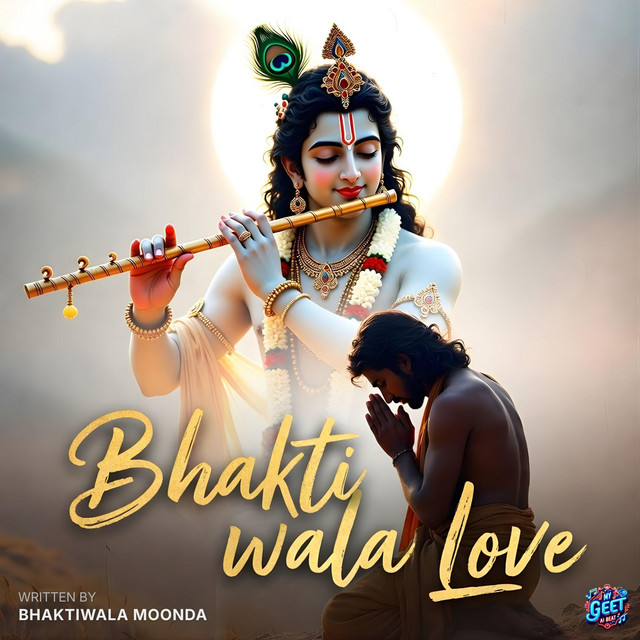
Bhakti Wala Love carries the meaning of a state beyond ordinary consciousness: broken free from the world's constraints, guided by a single melody that resonates everywhere. It is the album-title track for the Bhajanwala Moonda catalogue and its devotional energy is suited to exactly this hour — after the formal puja, when the household is prasad-eating and unhurried.
Go Govinda is about the tender longing of a modern soul reaching out to the divine in the most direct way. The meaning describes someone navigating daily life while holding a quiet line to something larger — spiritual yearning that is not theatrical but persistent. On Govardhan Puja specifically, Govinda is not metaphorical; the festival is literally named for the hill Krishna lifted. This song belongs in the afternoon, when the cooking is done and people are just sitting together.
The evening: after the lamp is lit
Govardhan Puja evenings often have a second, smaller puja — a lamp-lighting that echoes the Diwali sequence of the night before. This is the hour for Govinda Aala Re, a track whose meaning centres on the arrival of Govinda as a metaphor for inner peace coming after personal storms. It reimagines the traditional Dahi Handi cry — "Govinda has arrived" — and turns it inward. What has arrived is not the god on a float but the stillness that comes after whatever the previous weeks threw at you. For a day that falls at the end of the Diwali sequence, after the firecrackers and the late nights and the sugar overload, that metaphor lands.
The wider devotional catalogue on this site
The aarti texts for Krishna — with Devanagari, romanisation and line-by-line meanings — are at mygeetaibeat.com/aarti/aarti-kunj-bihari-ki. The full catalogue of devotional songs, including bhajans and Marathi geet, is at mygeetaibeat.com/collections/devotional-bhakti-songs. For modern Hindi bhajans specifically, there is also the guide at mygeetaibeat.com/blog/krishna-bhajan-modern-2026.
The full list, in order
- Majha Krishna Re — for the morning Annakut
- Majha Vitthu Mauli Re — for the puja preparation
- Bhakti Wala Love — for the prasad hour
- Go Govinda — for the afternoon
- Govinda Aala Re — for the evening lamp
Frequently asked questions
When is Govardhan Puja in 2026? Govardhan Puja 2026 falls on Tuesday 10 November according to Drik Panchang. Some calendars observe it on Monday 9 November, the day immediately after Diwali (8 November). The difference depends on when the Pratipada tithi is counted as beginning. If your family follows a specific panchang, use that date.
What is the Annakut? Annakut literally means "mountain of food" in Sanskrit. On Govardhan Puja, families prepare 56 dishes — a symbolic reference to the feast Krishna and the Vrindavan villagers held after Indra's storm ended — and arrange them before a small Govardhan Hill made from cow dung, mud or rice. The food is then distributed as prasad.
What music is appropriate for Govardhan Puja? Devotional songs, bhajans, and Krishna-related kirtan. Aartis dedicated to Krishna — like Aarti Kunj Bihari Ki — are traditional. Contemporary devotional songs work well for the quieter hours of the day after the formal puja is complete.
Written by Anup Karanjkar — Married Moonda.
Sources: Govardhan Puja 2026 date — Drik Panchang · Diwali 2026 sequence — Kissht