
Mera Sikkha lyrics meaning rests on one interaction: someone asks what is going on, and the answer comes back as two words — "mera sikka." Married Moonda's single from 27 June 2026 builds its whole identity from that refusal to elaborate. The full lyrics and line-by-line translation are on the Mera Sikkha lyrics page, but the song is worth reading closely, because the meaning is distributed across the small decisions the narrator keeps not making.
What "Sikkha" means and how it lands in the song
"Sikkha" — written as "sikka" in the romanised lyrics — is the Hindi word for coin. In spoken Hindi, the phrase "mera sikka jamna" (literally: my coin has landed) means to establish yourself so firmly in a room or a field that others recognise it. The narrator here has shortened the whole phrase to its bare object: just the coin, no verb, no context.
The question it answers is ordinary enough:
"Log poochhte hain: 'Bhai, aajkal kya chal raha hai?'"
Everyone gets asked this. Most people answer with a list. The narrator answers with a noun. That gap between what the question expects and what it gets is where the song's personality lives. The listener notices the gap before they even understand the idiom, and once they do, the whole song opens up from that one word.
The hook and what it is actually doing
Every chorus in Mera Sikkha returns to the same instruction: "chill kar yaar." That phrase — relax, friend — could read as advice aimed at the listener. In context, it is the narrator talking to themselves, marking another moment of external noise they are choosing not to receive.
"Faltu ka drama yahan, bhai, strictly prohibited hai" — pointless drama is prohibited. Not discouraged, not unwelcome. Prohibited.
That word choice is deliberate. The narrator is not tolerating drama with difficulty; they have already closed the door on it. The confidence in the track comes from that closed door rather than from anything they have achieved or announced.
"Baat kam, kaam zyada" — less talk, more work — is the philosophy underneath. The pride does not come from announcing what the narrator has done; it comes from not announcing it, from letting the results be the only statement.
The middle section that admits the obvious
The song's most important structural move is what happens roughly mid-track, where the swagger drops out entirely:
"Halki si hawa.. aur shaam ka ye waqt / Bina manzilon ke, nikal pade hum"
A light breeze, the evening hour, no destination, just moving. The mood shifts enough that it registers as a different kind of song for a few lines. The next line — "Kise pata hai, ki kal kya hoga?" — is plain: who knows what will happen tomorrow?
This admission is what prevents the track from being pure bravado. The calm in the rest of the song is not ignorance of uncertainty; it is a position taken in the face of it. The chill is a choice, not a given circumstance. That distinction matters, and the song makes it carefully rather than hiding it.
What the later verses say about cost and choice
The narrator has not stumbled into ease. The second half of the track names what was deferred to get here:
"Neend ko kiya hai snooze, success ko kiya hai choose" — sleep has been pushed aside; success is the active selection.
What follows is equally considered: the line about having nothing to lose. In many Hindi songs about struggle, that phrase appears at rock bottom. Here it marks a cleared field — the narrator has already made their decision and is no longer carrying the weight of what might go wrong. The people who talk from behind will stay behind; the narrator notes this once and moves on.
The final verse closes with vision and decision placed side by side: "Aankhon mein vision hai, yahi mera decision hai." Eyes and choice are named as the same thing.
Where Mera Sikkha fits in the catalogue
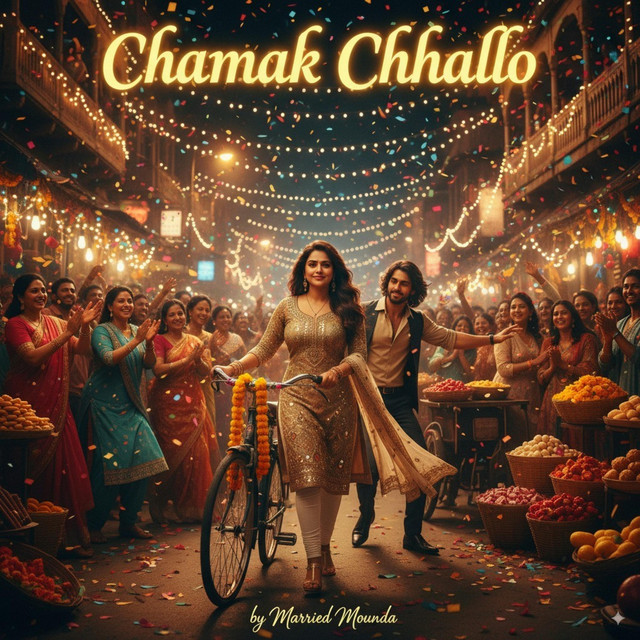
Married Moonda's catalogue has other playful tracks. Banda Chill Hai covers similar ground from a Hip-Hop angle, and Chamak Chhallo has its own kind of lightness. Mera Sikkha sits in a different pocket: too self-aware to be purely motivational, too calm to be a flex track. It is better described as a record about the state of mind that exists after a decision has been made and before the results have arrived.
The single is on Spotify, released 27 June 2026. The official music video premieres on the My Geet AI Beats YouTube channel on Tuesday, 27 October 2026, at 7 pm IST.
For broader coverage of Hindi independent music from this year, new Hindi indie songs for October 2026 places this single in the wider picture.
How to read the lyrics in full
The Mera Sikkha lyrics page carries the original Romanised Hindi and a complete English translation side by side. The middle section — the evening walk without a destination — is the part that repays the most attention on the page. In a quick first listen it can pass quickly; with the translation next to it, the shift from "my Wi-Fi is connected" to "who knows what tomorrow holds" lands harder than it might on the first pass.
Frequently asked questions
What does "mera sikkha" mean in English? "Sikkha" (or "sikka") is the Hindi word for coin. The phrase "mera sikka" draws on the idiom "mera sikka jamna," which means to establish your mark or earn your standing. In the song, the narrator uses it as a two-word answer that declines to explain anything further.
What is the theme of Mera Sikkha? The song is about chosen ease — a narrator who has made a decision, accepted uncertainty, and stepped back from drama rather than engaging with it. The pride in the track comes not from announcing achievements but from the quiet refusal to be derailed by anything outside their immediate radius.
When did Mera Sikkha come out? Mera Sikkha was released on 27 June 2026 as a standalone single by Married Moonda on Spotify and other major streaming platforms.
Written by Anup Karanjkar — Married Moonda.