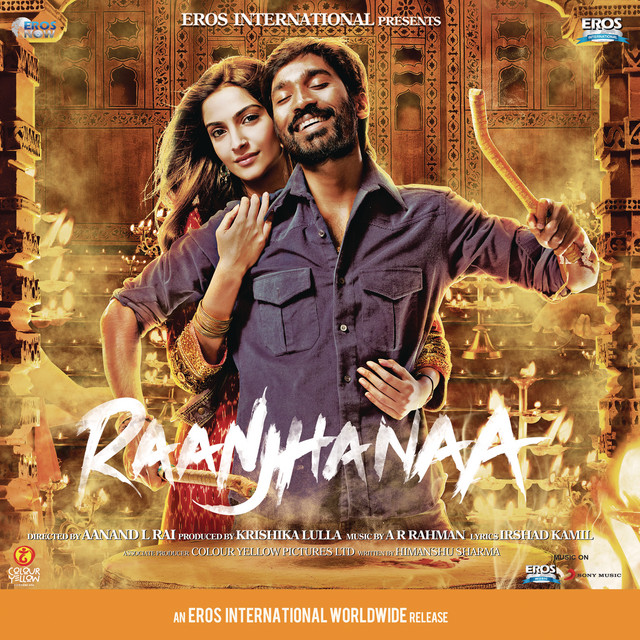
Raanjhanaa — the title track of the 2013 film — is one of A.R. Rahman's most enduring statements about obsessive love, and the word itself carries more history than the song's three minutes can hold.
What does "Raanjhanaa" mean?
Raanjhanaa means beloved — but with a very specific ancestry. It comes from Ranjha, the male half of Heer-Ranjha, Punjab's great tragic romance. Over centuries, Ranjha's name stopped being just a character and became a common noun: to call someone your raanjhanaa is to cast them as the doomed, devoted lover of legend — love as complete surrender, with the tragedy built into the word itself.
That's why the title fits the film so precisely. Kundan's love in Raanjhanaa is exactly Ranjha-shaped: total, unreciprocated, and headed somewhere the folk tale already warned us about.
Who made it
- Film — Raanjhanaa (2013), starring Dhanush and Sonam Kapoor
- Music — A.R. Rahman
- Voices — Jaswinder Singh and Shiraz Uppal
- Released — 31 May 2013
Why the song still circulates
Rahman scored the title track like a qawwali caught mid-spin — devotional energy pointed at a person instead of the divine, which is the film's whole thesis. The sufi framing isn't decoration: in that tradition the beloved and the divine blur deliberately, and Raanjhanaa rides that ambiguity. It is sung like worship because, for the character, it is.
A decade on, the song outlives its film's arguments. It resurfaces every time a new generation discovers the Heer-Ranjha lineage — or every time someone needs one word for a love that knows better and continues anyway.
Read more
- Our Raanjhanaa song page — credits and song guide
- For more words with this kind of ancestry, see our glossary of Hindi and Urdu words in songs
- Browse the lyrics library
This article discusses the song and its context. It does not reproduce the lyrics.